
Refugee Era
Refugee Camps and the Southeast Asia Refugee Crisis, 1975–1982
An interactive guide to the Thai refugee camps and the Southeast Asia refugee crisis of 1975 to 1982, centered on the Hmong and set beside the Lao, Khmer and Vietnamese: data, questions, people and references.
- 1,463,000refugees counted, April 1975 to August 1982
- 259,167people in Thai camps at the end of 1979
- 1,075,337resettled abroad by July 1981
- 53,700Highland Lao resettled in the U.S., 1975–82
Overview
When communist governments took power in Vietnam, Cambodia and Laos in 1975, more than a million people left over the next seven years. About 513,000 crossed by land into Thailand and about 539,000 left Vietnam by sea (Thompson, 2010, p. 235). Others were evacuated, expelled or left through organized programs. Refugee workers in Thailand interviewed families and prepared the cases that decided who would be resettled and where (Thompson, 2010, pp. 111–113).
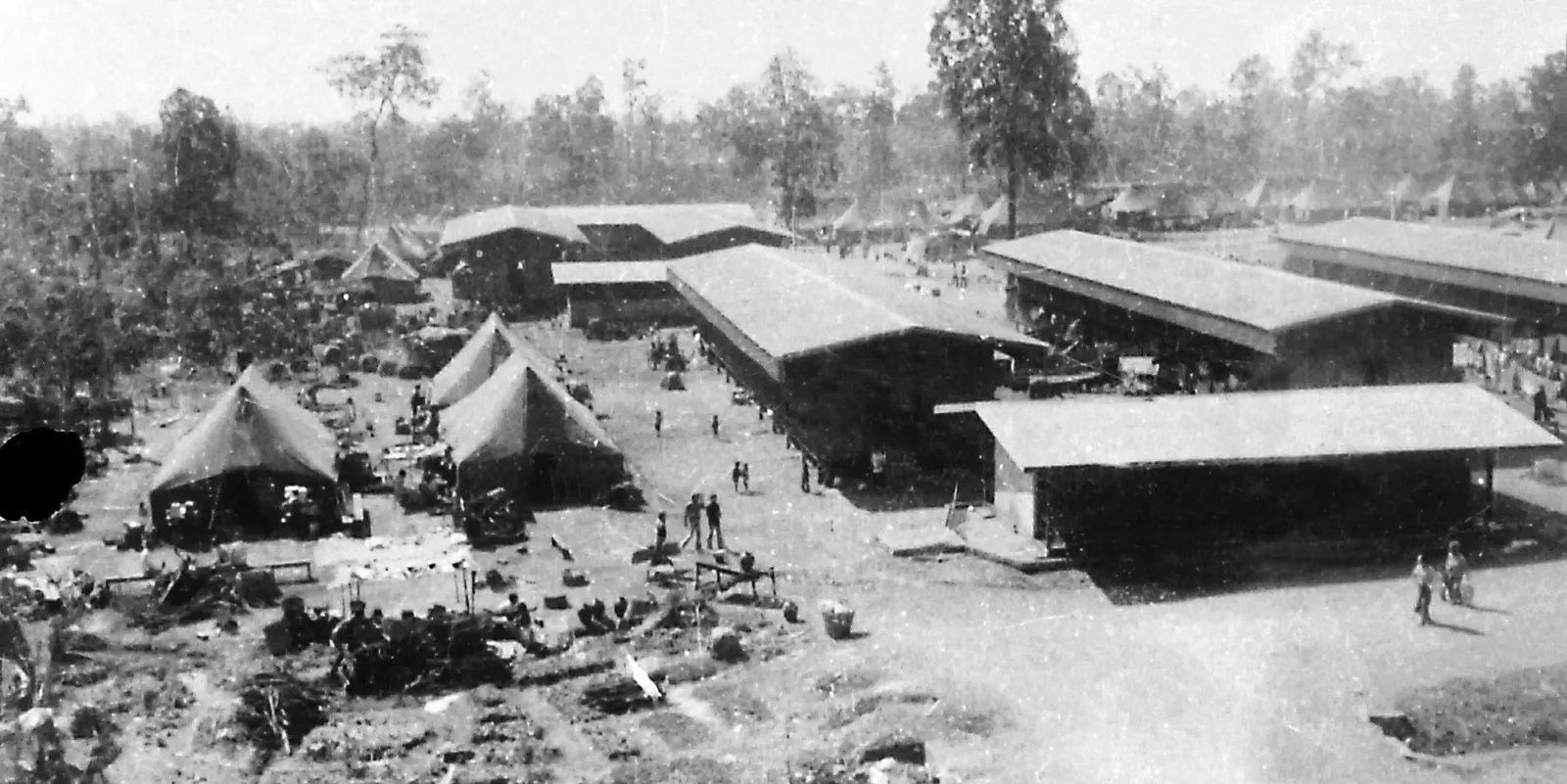
The Hmong reached Thailand after the fall of Long Tieng in May 1975. About 40,000 Hmong and other Lao crossed the Mekong by the end of that year, and Ban Vinai, supported by CIA funds, became the largest Hmong refugee camp in Thailand for the next twenty years (Thompson, 2010, p. 60). The first unofficial camp was a temple compound at Nong Khai, opened by the Hmong officer Yang See on May 13 (See, n.d., pp. 12, 14). Lao, Cambodian and Vietnamese refugees lived in the same system, and all were considered for admission to the United States under the same parole categories (Thompson, 2010, p. 76).
From 1975 to 1980 nearly all Indochinese refugees entered the United States on parole, and a new Refugee Law followed in 1980 (Thompson, 2010, p. 76). Admissions rose through 1979 and 1980, when 166,700 refugees arrived in a single fiscal year, and fell to 72,100 by 1982 (Thompson, 2010, p. 244). The sections below follow the crisis phase by phase and group by group, with the data, questions, camps and people of the era.
Interactive
The crisis in seven phases
Choose a period to see what changed, and the numbers that go with it.
Collapse and escape April to December 1975
Saigon fell, Long Tieng was evacuated in mid-May and the Pathet Lao took power in Laos. President Ford announced an Interagency Task Force on April 18 to coordinate the evacuation (Thompson, 2010, p. 11). About 40,000 Hmong and other Lao crossed the Mekong by the end of the year (Thompson, 2010, p. 60). On August 1 the attorney general paroled 3,466 people in a special Lao program (Thompson, 2010, p. 103), and the camps held 64,846 people at year’s end (Thompson, 2010, p. 218).
- Interagency Task ForceAnnounced April 18
- Long Tieng evacuationMid-May
- Special Lao parole3,466 on August 1
- Camp population, year end64,846
The Udorn team August 1975 to early 1976
The Embassy assigned Mac Thompson to the consulate in Udorn on August 4 to set up a refugee program (Thompson, 2010, p. 103). He and Jerry Daniels argued that the Hmong deserved the chance to resettle in the United States, while a State Department telegram of September 30 said the Hmong would not be included in the parole program (Thompson, 2010, p. 106). Lionel Rosenblatt’s visit in late October and his telegram to Washington began the change, and the State Department proposed 11,000 additional admissions in January 1976 (Thompson, 2010, pp. 107–109).
- Udorn office opensAugust 4, 1975
- Cable of concernSeptember 30
- Rosenblatt visitLate October
- Places proposedJanuary 1976
Expanded Parole January to June 1976
The Expanded Parole Program had three groups: 3,000 close relatives of U.S. citizens or permanent residents, 800 former U.S. government employees and their families, and 7,400 people vulnerable to persecution because of their identification with the United States (Thompson, 2010, p. 110). Rosenblatt and four colleagues set up in the AID house on Soi One in Bangkok (Thompson, 2010, p. 111). The authorization to spend the funds expired on June 30, 1976, and the matter was settled on the evening of that last day (Thompson, 2010, pp. 110, 117).
- Places proposed11,000
- Breakdown3,000 + 800 + 7,400
- Staff from WashingtonFive, with Rosenblatt
- DeadlineJune 30, 1976
The JVA system 1977 to 1978
Shep Lowman chose the International Rescue Committee to head the Joint Voluntary Agency in Thailand, and by mid-1978 it operated with about 20 American employees (Thompson, 2010, p. 126). On June 14, 1978 the United States decided to accept 25,000 Indochinese for the following year, half from the Thai land camps and half from boat refugees (Thompson, 2010, p. 126). Camp populations stood at 97,595 in 1977 and 138,727 in 1978 (Thompson, 2010, p. 218).
- JVA staff, mid-1978About 20 Americans
- U.S. commitment25,000
- Camp population, 197797,595
- Camp population, 1978138,727
The peak 1979
The year of the greatest exodus from Vietnam and Cambodia. Camps held 259,167 people at year’s end (Thompson, 2010, p. 218). UNHCR and Vietnam agreed on orderly departures in March (Thompson, 2010, p. 165). On June 12 Rosenblatt and Yvette Pierpaoli selected Cambodians at Wat Ko (Thompson, 2010, p. 174), a UNHCR report of July 3 estimated that 42,000 Cambodians had been pushed back at Preah Vihear (Thompson, 2010, p. 177), and the Land Bridge opened on December 12 (Thompson, 2010, p. 201). Highland Lao admissions to the U.S. reached 11,300 (Thompson, 2010, p. 244).
- Camp population, year end259,167
- Wat Ko selectionJune 12
- Preah Vihear push back42,000 estimated
- Land Bridge beginsDecember 12
Largest year of departures 1980
The United States adopted a new Refugee Law in 1980, ending the era when nearly all Indochinese entered on parole (Thompson, 2010, p. 76). Departures to the United States reached 166,700 in fiscal 1980, and Highland Lao departures peaked at 27,200 (Thompson, 2010, p. 244). Reports of “yellow rain” among the Hmong began in May 1980 and became a long controversy (Thompson, 2010, pp. 229–230).
- U.S. total, FY1980166,700
- Highland Lao, FY198027,200
- Camp population258,680
- Yellow rain reportsFrom May 1980
Managing down 1981 to 1982
Lionel Rosenblatt recalled that the watchword of the State Department in 1981 was to “manage down” the refugee numbers (Thompson, 2010, p. 237). Departures to the United States fell to 132,500 in fiscal 1981 and 72,100 in 1982 (Thompson, 2010, p. 244), and the camps held 232,107 people on July 31, 1981 (Thompson, 2010, p. 218). Jerry Daniels was found dead in his Bangkok apartment, and the news reached Washington on April 30, 1982 (Thompson, 2010, p. 241).
- U.S. total, FY1981132,500
- U.S. total, FY198272,100
- Camp population, Jul 1981232,107
- News of Daniels’ deathApril 30, 1982
Interactive
Four peoples, one system
Select a group. Government tables count the Hmong with the Highland Lao.
Highland Lao (Hmong and other highland peoples)
Government tables count the Hmong with the Highland Lao, a category that also includes other highland peoples such as the Mien (Thompson, 2010, pp. 103, 235). Most Highland Lao fled after the communist takeover in May 1975. New arrivals who crossed the Mekong were held at the So Ko Tou detention center for weeks or months, and the Hmong then went on to Ban Vinai (Thompson, 2010, p. 228). Departures to the United States peaked in fiscal 1980 at 27,200 (Thompson, 2010, p. 244).
Lowland Lao
Ethnic Lao from the Mekong valley and towns, with civil servants, soldiers and families who had worked with Americans. A special Lao program paroled 3,466 people on August 1, 1975 (Thompson, 2010, p. 103). Lowland Lao moved on to the Nong Khai camp (Thompson, 2010, p. 228). Departures to the United States reached 7,100 in fiscal 1976 and rose again to 18,900 in 1979 and 28,300 in 1980 (Thompson, 2010, p. 244).
Cambodian (Khmer)
The largest land group, about 212,000 people (Thompson, 2010, p. 235), and the group that filled the border camps from 1979. In June 1979 about 6,000 Cambodians were held at Wat Ko before a forced return, and Lionel Rosenblatt and Yvette Pierpaoli were among four people who selected 1,200 for resettlement (Thompson, 2010, p. 174). Thai authorities pushed tens of thousands back at Preah Vihear that month (Thompson, 2010, p. 177), and the Land Bridge feeding program began on December 12 (Thompson, 2010, p. 201).
Vietnamese
The 1975 evacuation brought 125,000 Vietnamese to the United States in the first year, and the later wave left by sea (Thompson, 2010, p. 235). The land count of 23,000 covers only those who crossed into Thailand, while the U.S. figures combine all Vietnamese arrivals. In March 1979 UNHCR reached an agreement with Vietnam for orderly departures, and the Orderly Departure Program became a major factor in reducing the dangerous sea departures (Thompson, 2010, p. 165).
Interactive
The data
Five charts. Hover, tap or use the keyboard on any bar for its value. Each chart has a data table you can copy.
View the data
| Boat refugees | 539,000 |
|---|---|
| Vietnam to China | 263,000 |
| Cambodian, by land | 212,000 |
| Lowland Lao, by land | 152,000 |
| Highland Lao, by land | 126,000 |
| Vietnam to U.S., 1975 | 125,000 |
| Vietnamese, by land | 23,000 |
| Orderly Departure | 23,000 |
View the data
| Year | People |
|---|---|
| 1975 | 64,846 |
| 1976 | 75,866 |
| 1977 | 97,595 |
| 1978 | 138,727 |
| 1979 | 259,167 |
| 1980 | 258,680 |
| 1981 | 232,107 |
View the data
| Year | Vietnamese | Lowland Lao | Highland Lao | Cambodian | Total |
|---|---|---|---|---|---|
| FY1975 | 125,000 | 500 | 300 | 4,600 | 130,400 |
| FY1976 | 3,200 | 7,100 | 3,000 | 1,100 | 14,400 |
| FY1977 | 1,900 | 400 | 1,700 | 300 | 4,300 |
| FY1978 | 11,100 | 4,100 | 3,900 | 1,300 | 20,400 |
| FY1979 | 44,500 | 18,900 | 11,300 | 6,000 | 80,700 |
| FY1980 | 95,200 | 28,300 | 27,200 | 16,000 | 166,700 |
| FY1981 | 86,100 | 15,600 | 3,700 | 27,100 | 132,500 |
| FY1982 | 42,600 | 6,800 | 2,600 | 20,100 | 72,100 |
View the data
| United States | 515,029 |
|---|---|
| China | 265,588 |
| France | 77,787 |
| Canada | 77,317 |
| Australia | 54,623 |
| Germany | 19,102 |
| United Kingdom | 15,239 |
| Switzerland | 8,930 |
| All other countries | 41,722 |
View the data
| Boats attacked | 352 |
|---|---|
| Deaths from piracy | 571 |
| Reported rape victims | 599 |
| Abductees | 243 |
| Boats attacked | 141 |
|---|---|
| Deaths from piracy | 155 |
| Reported rape victims | 179 |
| Abductees | 157 |
| Boats attacked | 77 |
|---|---|
| Deaths from piracy | 43 |
| Reported rape victims | 85 |
| Abductees | 89 |
Dig deeper
Questions from the era
Fifteen questions readers ask, with cited answers. Search, filter by topic, and copy any answer with its reference.
Why were the Thai camps kept so basic?Camps
Thailand’s policy toward refugees was “humane deterrence.” The government tried to make life difficult enough to discourage new arrivals, and Thai officials also worried that villagers in the poor northeast would resent refugees who received food and aid they did not (Thompson, 2010, p. 172). Refugees received the minimum needed to sustain life (Thompson, 2010, p. 115). In the rainy season of 1975 the camps were crowded and muddy, and dysentery, malnutrition and malaria were problems (Thompson, 2010, p. 108).
What was So Ko Tou?Camps
A detention center where Thai police took new arrivals who had swum or floated across the Mekong. A visitor described high walls of wood and corrugated roofing around about an acre, with up to four thousand people living in makeshift shacks. People stayed for weeks or months, and then the Lao went on to the Nong Khai camp and the Hmong to Ban Vinai (Thompson, 2010, p. 228).
What was daily life like in Ban Vinai?Camps
Ban Vinai became the largest Hmong refugee camp in Thailand and remained so for twenty years (Thompson, 2010, p. 60). It was divided into seven centers, each with its own leader, and the Hmong kept their traditional leadership under a head man who was Vang Neng, a cousin of General Vang Pao, in 1980 (Thompson, 2010, p. 227). Families lived in huts of scrap wood and bamboo or in houses built on stilts, grew upland rice, squash and beans, and kept turkeys and chickens. Noodle carts and food stalls were common, and traditional healers and shamans worked in the camp (Thompson, 2010, p. 226).
What was parole, and who qualified?Policy
Between 1975 and the Refugee Law of 1980, nearly all Indochinese refugees entered the United States on parole. Four categories set the order of admission. Category I covered close relatives of people in the United States and unaccompanied minors under 17. Category II covered former U.S. government employees. Category III covered people at risk because of past ties to the United States. Category IV covered other compelling humanitarian cases (Thompson, 2010, p. 76).
How did a refugee get approved for the United States?Policy
The process began with Joint Voluntary Agency pre-screening and a request for a security (“Falcon”) clearance, followed by interviews with refugee officers, an interview and decision by the Immigration and Naturalization Service, a sponsor interview, sponsor matching and a medical exam, and finally ICEM documents and transport. It took from three months to several years (Thompson, 2010, pp. 112, 127). The steps are laid out in the feature on the refugee workers of Thailand.
Why did UNHCR argue against resettlement?Policy
UNHCR had long argued against resettlement. Its representative in Bangkok, Martin Barber, held that a refugee camp would never be emptied, because new arrivals would always follow relatives to the West (Thompson, 2010, p. 237). The Citizens Commission on Indochinese Refugees, created in 1977 under Leo Cherne, argued for continued admissions (Thompson, 2010, pp. 123, 126).
Who opened the first unofficial refugee camp in Thailand?Hmong
Yang See, a Hmong development officer known by the code name Glassman, resigned on May 10, 1975 and crossed the Mekong to Nong Khai to look for shelter. Nong Khai’s governor approved the grounds of Wat Samakkhi on May 13, the first Hmong groups crossed on May 14, and the camp grew from about 500 to about 2,500 people within days. Buses began carrying families to Nam Phong on May 21 (See, n.d., pp. 10–12, 14, 17, 23). A day-by-day account with a map is in the feature on the hidden crossing at Nong Khai.
Why did many Hmong families hesitate to go to the United States?Hmong
Many Hmong hoped to return to Laos, and leaders including Vang Pao encouraged them to stay in the camps in expectation of going home (Thompson, 2010, p. 229). If resettlement could not be avoided, they asked for a reservation, similar to an Indian reservation, in the United States (Thompson, 2010, p. 108). What families knew of America came largely from photographs and cassette tapes sent by relatives, and it sounded like a lonely existence (Thompson, 2010, p. 229). “No shows” were often high when buses came to take refugees to Bangkok, yet most Hmong approved for resettlement eventually boarded (Thompson, 2010, pp. 228–229).
Does “Highland Lao” mean the Hmong?Hmong
Highland Lao is a statistical category that includes the Hmong together with other highland peoples. The government tables count about 126,000 Highland Lao arrivals in Thailand and 53,700 resettled in the United States by 1982 (Thompson, 2010, pp. 235, 244). The Hmong were the largest part of this group, but the tables give no separate Hmong figure.
Who was the first Hmong family sponsored to the U.S. through this system?Hmong
Accounts differ. Mac Thompson recalled that the first sponsorship offer for a Hmong came from Minneapolis in November or December 1976 (Thompson, 2010, p. 99). Kue Chaw, a radio operator for Jerry Daniels, left Thailand on May 15, 1976 and resettled in Philadelphia with his wife and thirteen children, and a Hmong colony later formed near Hickory, North Carolina (Thompson, 2010, p. 100).
How many people lived in the Thai camps at the peak?Numbers
At the end of 1979 the camps held 259,167 people, up from 64,846 four years earlier. On July 31, 1981 the total was 232,107: 123,131 Cambodian, 55,785 Highland Lao, 39,259 Lowland Lao and 13,932 Vietnamese (Thompson, 2010, p. 218).
Which countries took the most refugees?Numbers
By July 31, 1981, the United States had resettled 515,029 of 1,075,337 people, about 48 percent. China took 265,588, France 77,787, Canada 77,317 and Australia 54,623 (Thompson, 2010, p. 237).
How dangerous was the sea route?Sea
UNHCR counts for boats arriving in Thailand show 571 deaths from piracy in 1981, along with 599 reported rape victims and 243 abductees. The counts rest solely on reports by the boat people, and the table does not cover 1978 to 1980, when more boats came (Thompson, 2010, p. 168).
What happened at Wat Ko and Preah Vihear in 1979?Cambodia
On the night of June 12, 1979, Lionel Rosenblatt and Yvette Pierpaoli drove to Wat Ko, a temple near Aranyaprathet where about 6,000 Cambodians were held before a forced return. France, the United States and Australia had obtained agreement to select 1,200 for resettlement, and the four selectors, working for three hours, left with 1,296 (Thompson, 2010, pp. 174–175). Later that month Thai authorities pushed Cambodians back across the border at Preah Vihear, and a UNHCR report of July 3 estimated 42,000 had been pushed back (Thompson, 2010, p. 177).
What were the Land Bridge and the Orderly Departure Program?Policy
In March 1979 UNHCR reached an agreement with Vietnam for the orderly departure of citizens who wished to leave, and the Orderly Departure Program became a major factor in reducing near-suicidal sea departures (Thompson, 2010, p. 165). The Land Bridge, begun at Nong Chan on December 12, 1979, was a cross-border feeding program for Cambodians who came to the border in search of food (Thompson, 2010, p. 201).
What did the voluntary agencies do?Policy
The Interagency Task Force contracted nine voluntary agencies, known as VOLAGs, to match refugees with sponsors (Thompson, 2010, p. 80). In Thailand the Joint Voluntary Agency, headed by the International Rescue Committee, handled processing in the field (Thompson, 2010, p. 126).
Places
Camps and crossings
People
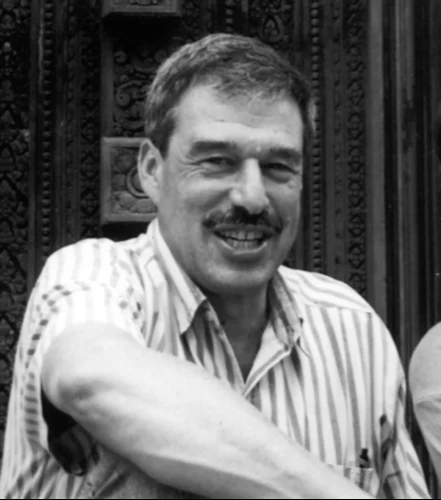
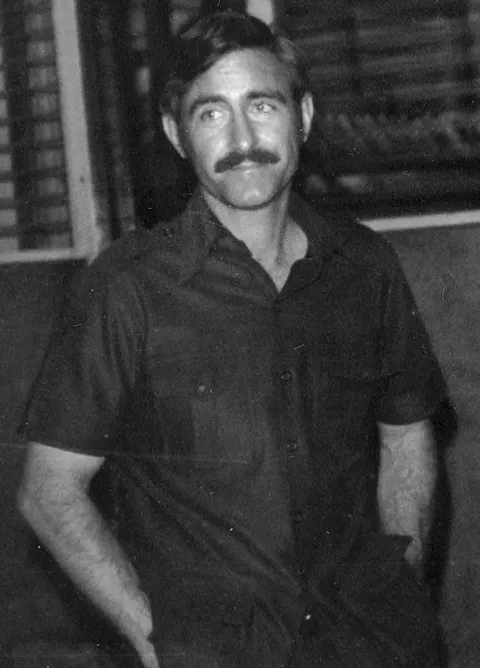
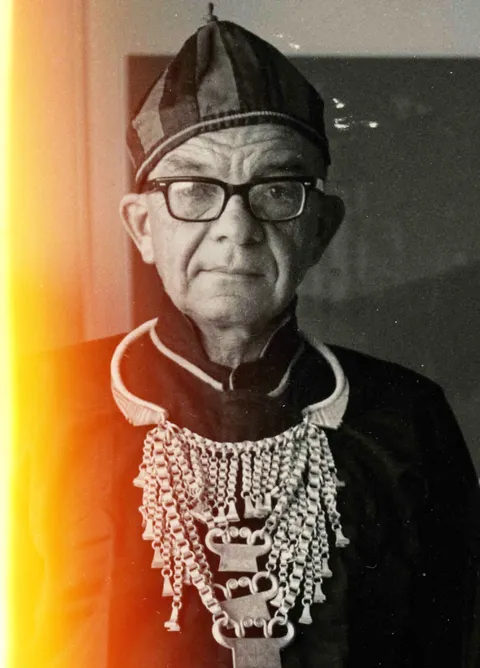
The refugee workers
Profiles of the people who built the system, in the order a family would have met them.
Glossary
Terms of the refugee era
Each term has its own Encyclopedia entry with references.
Keep going
Related reading
References
References
- Thompson, L. C. (2010). Refugee workers in the Indochina exodus, 1975–1982. McFarland.
- See, Y. (n.d.). True story never told: How in imminent danger of losing their lives Lao and Hmong refugees fled en masse out of a relatively quiet Laos for safety in Thailand in May 1975 [Unpublished manuscript]. T-28 Trojan Foundation.
Page numbers for See (n.d.) refer to the PDF pages of the manuscript.
Hmongstory Legacy. (2026, November 17). Refugee Camps and the Southeast Asia Refugee Crisis, 1975–1982. https://hmongstorylegacy.com/refugee-camps/